Introduction
For a lot of households, the coffee maker sitting on the counter isn’t just an appliance — it’s part of the morning routine that everything else revolves around. Over the past decade, single-serve pod coffee makers have become one of the most common ways people brew coffee at home, largely because they trade some of the ceremony of traditional brewing for speed, consistency, and simplicity. The Keurig K-Express Single Serve K-Cup Pod Coffee Maker is one entry in that category, designed as a straightforward, no-frills brewer aimed at people who want a cup of coffee (or tea, or cocoa) without much setup or cleanup.
This article walks through what the K-Express is designed to do, how it fits into different kitchens and routines, and the practical details worth thinking about before adding one to a countertop. Rather than framing this as a review or a recommendation, the goal here is to lay out the facts — the features, the intended use cases, the possible limitations — so you can decide for yourself whether this type of coffee maker matches how you actually make and drink coffee.
Single-serve brewers occupy a particular niche in the coffee world. They aren’t trying to replicate the depth of a pour-over or the intensity of an espresso machine. Instead, they’re built around convenience: insert a pod, press a button, and have a hot beverage in a couple of minutes without measuring grounds, dealing with a carafe, or cleaning a filter basket. The K-Express fits squarely into that philosophy, focusing on a compact footprint, simple controls, and a handful of practical features rather than a long list of programmable settings or a digital interface.
Understanding a product like this comes down to matching its design intentions with your own habits. Someone who wants to experiment with pour-over ratios or roast their own beans probably isn’t the target audience. Someone who wants a fast, consistent cup with minimal daily maintenance might find the category — and this model specifically — worth a closer look.
Key Features
Three Brew Sizes
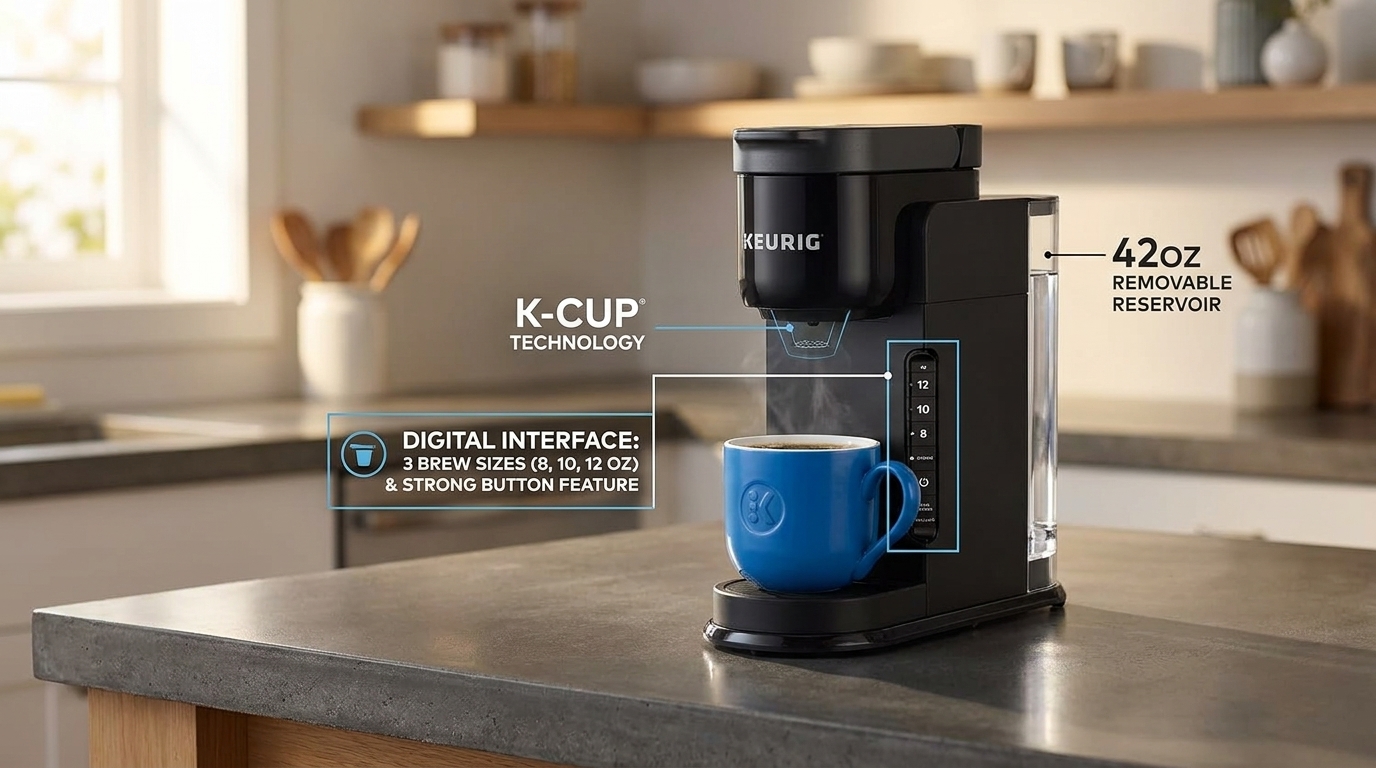
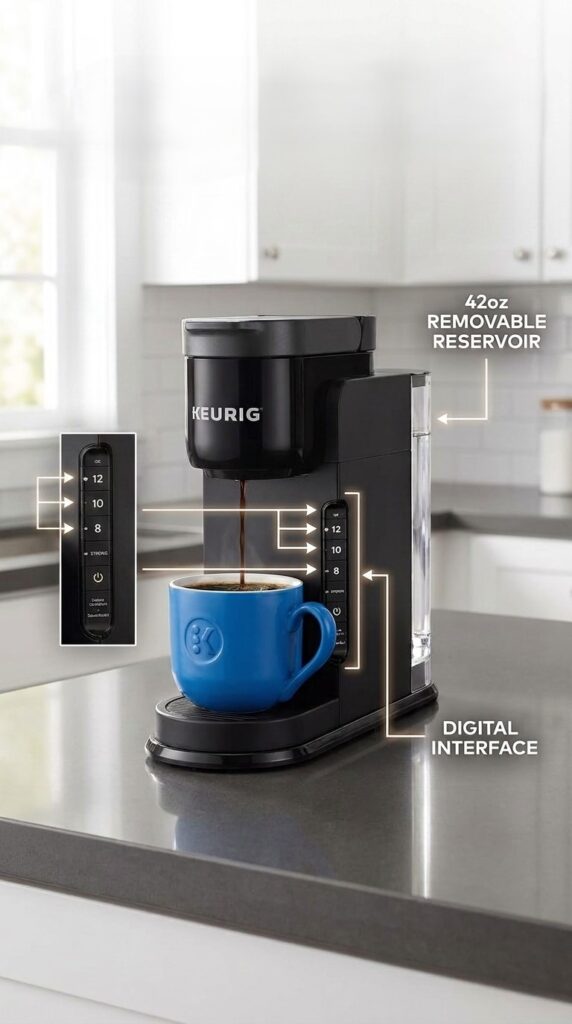
The K-Express offers three cup size options — 8, 10, and 12 ounces — selected with the press of a button. This range covers a fairly typical span of what people drink in a single sitting, from a smaller, more concentrated cup to a fuller mug. Because the brewer doesn’t dilute or adjust grounds automatically, the size you choose affects the strength and volume of the final cup, which is worth keeping in mind if you tend to prefer a bolder or lighter beverage.
Strong Button
In addition to the size selection, the machine includes a dedicated Strong button. Pressing it before brewing is intended to slow the water flow through the pod, which increases contact time between water and grounds and typically produces a more robust, less watered-down cup. This feature is particularly relevant for anyone who finds standard K-Cup brews on the milder side, since pod-based coffee can sometimes taste weaker than drip-brewed coffee made with the same amount of grounds.
42-Ounce Removable Reservoir
The water reservoir holds up to 42 ounces, which the manufacturer notes is enough for roughly four 8-ounce cups before a refill is needed. Because the reservoir is removable, it can be taken to the sink and filled directly under the tap rather than requiring a pitcher or measuring cup. This is a small detail, but it matters for daily convenience — especially in kitchens where counter space near an outlet is limited and the coffee maker isn’t positioned right next to the sink.
Compact, Simple Design
At roughly 12.8 inches deep, 5.1 inches wide, and around 12.6 inches tall (about 17.2 inches with the handle raised), the K-Express is built to take up a relatively small footprint compared to larger multi-cup drip machines or higher-end single-serve models with bigger reservoirs and touchscreens. The narrow width in particular is meant to make it easier to fit on counters where space is tight, such as apartments, dorm rooms, or smaller kitchens.
Auto-Off Function
To help manage energy use, the machine automatically powers off five minutes after the last brew. This means it doesn’t need to be manually switched off after each use, and it also reduces the amount of time the internal heating element stays active when the machine isn’t in use. When you’re ready to brew again, turning it back on returns it to a ready state relatively quickly.
Back-to-Back Brewing
Unlike some coffee makers that need time to reheat between cups, the K-Express is designed to brew a second cup immediately after the first, without a cooldown or reheating period. This is useful in households with more than one coffee drinker, or simply when you want a second cup shortly after the first without standing around waiting for the machine to catch up.
Compatibility with My K-Cup Reusable Filter
While the machine is built around K-Cup pods, it’s also compatible with the My K-Cup Universal Reusable Coffee Filter, which is sold separately. This accessory allows you to brew your own ground coffee instead of using pre-packaged pods, which can be a useful option for anyone who wants more control over the coffee they’re using, prefers a specific bean or roast that isn’t available in pod form, or simply wants to reduce reliance on single-use pods for at least some of their brewing.
Travel Mug Friendly Drip Tray
The removable drip tray is designed to accommodate travel mugs up to about 7.4 inches tall, meaning you can brew directly into a larger mug or a tall tumbler without the base of the machine getting in the way. Removing the tray creates more clearance underneath the spout, which is a small but practical touch for anyone brewing coffee to take out the door.
Water and Maintenance Indicators
The brewer includes an Add Water indicator light that illuminates if there isn’t enough water in the reservoir for the selected cup size, and it will not begin brewing until more water is added. Keurig machines in this line also typically include a maintenance reminder that prompts a descaling cycle after a set number of brews, which helps maintain performance over time as mineral buildup from water naturally accumulates inside any coffee maker.
How It Can Be Used
A single-serve coffee maker like the K-Express tends to slot into a few common scenarios rather than one specific use case.
Everyday morning brewing. For many people, the primary use is simply making a single cup of coffee before heading out the door or starting the workday from home. Because there’s no need to measure grounds or wait for a full pot to brew, the process from pressing a button to having a finished cup typically takes just a couple of minutes.
Multi-person households with different preferences. Since each brew is made individually, a K-Express can accommodate a household where people want different beverages — one person having regular coffee, another prefering decaf, and someone else opting for tea or hot cocoa — without needing to brew separate pots or make compromises on strength and size.
Small offices or shared spaces. Because of its compact size and simple one-button operation, this type of brewer is also commonly used in small offices, break rooms, guest rooms, or shared living spaces where multiple people need to make individual drinks throughout the day without a shared carafe sitting out and going stale.
Guest hospitality. The 42-ounce reservoir and back-to-back brewing capability make it reasonably practical for situations with occasional guests, since it can produce several cups in a row without needing to be refilled or waiting between brews.
Exploring your own ground coffee. With the optional reusable filter, the machine can also serve a slightly different purpose: brewing single cups from your own ground coffee rather than pods. This opens up the possibility of using specialty or locally roasted coffee that isn’t sold in pod form, or simply having a lower-waste option available for the times you want to use it.
Beyond coffee. Because K-Cup pods aren’t limited to coffee, this machine can also be used to brew tea, hot cocoa, and other hot beverages that come in compatible pod formats, which can make it a more general-purpose hot drink station rather than a coffee-only appliance.
Who It May Be Suitable For
Given its feature set, the K-Express tends to appeal to a fairly specific set of users, though of course individual needs vary.
- People who prioritize simplicity over customization. With straightforward button controls rather than a digital display or programmable settings, this machine is generally aimed at people who want to press a button and get coffee, rather than adjust temperature curves or pre-schedule brews.
- Individuals or small households. The reservoir size and single-cup format are well suited to one or two regular coffee drinkers rather than a household that would otherwise need a full carafe at once.
- People in space-constrained kitchens. The relatively narrow footprint can be a practical fit for apartments, dorm rooms, small offices, or kitchens where counter space is at a premium.
- Those newer to single-serve brewing. Because the operation is minimal — insert pod, choose size, optionally choose strong, press brew — it can be an accessible entry point for someone switching from a traditional drip machine or trying pod-based coffee for the first time.
- Anyone who values speed in the morning. Since there’s no need to wait for a full pot, and back-to-back brewing means multiple cups can be made in quick succession, it may suit people with limited time in the morning or variable schedules.
On the other hand, people who typically brew large batches of coffee at once, who want a built-in grinder, who are looking for milk-frothing or espresso-style functionality, or who want extensive programmability (like scheduled brew times or strength customization beyond a single Strong button) may find that a different category of machine — a standard drip coffee maker, a more advanced single-serve model, or a dedicated espresso machine — lines up better with what they’re looking for.
Important Things to Consider
No coffee maker is a perfect fit for every kitchen, and it’s worth thinking through a few practical details before deciding whether this type of brewer matches your habits.
Pod dependency and cost per cup. K-Cup pods are convenient, but relying on them as your primary coffee source means an ongoing cost per cup that can add up differently than buying coffee in bulk. The reusable filter option offsets this somewhat, but using it does add an extra step (measuring and cleaning grounds) that reduces some of the convenience that draws people to pod brewing in the first place.
Reservoir size versus household size. A 42-ounce reservoir is reasonable for a person or small household, but larger families or offices with frequent, simultaneous coffee needs may find themselves refilling more often than they would with a machine built around a bigger tank or a traditional carafe system.
No large-batch brewing. Because this is a single-serve machine, it isn’t designed to produce a full pot of coffee at once. If your routine typically involves brewing coffee for several people simultaneously, a single-cup format may mean more individual brewing cycles rather than one larger batch.
Environmental considerations. Single-use K-Cup pods generate more packaging waste per cup than bulk-ground coffee brewed in a traditional machine. Many pod brands now offer recyclable options, and the reusable filter accessory is one way to reduce this if it’s a concern, but it’s a factor worth weighing against the convenience trade-off.
Maintenance and descaling. Like any coffee maker, mineral buildup from water can affect performance over time, particularly in areas with hard water. The machine includes a reminder for periodic descaling, and staying on top of that maintenance step helps keep brewing consistent and can extend the appliance’s working life.
Limited customization. With three brew sizes and one strength adjustment (the Strong button), this model doesn’t offer the level of fine-tuning found on some higher-end single-serve machines, such as adjustable temperature settings, multiple strength levels, or app connectivity. For users who want a simple, predictable process, this is generally a non-issue; for those who like to fine-tune their brew, it may feel limited.
Voltage and regional compatibility. As with most Keurig machines, this model is built for standard 120V/60Hz household outlets used in the US and Canada, which is a detail worth noting if you’re purchasing for use outside that region.
Comparing Single-Serve Coffee Makers to Other Brewing Categories
It can help to place single-serve pod machines like the K-Express in context alongside other common ways people brew coffee at home, without singling out any specific competing product.
Single-serve pod machines vs. traditional drip coffee makers. Drip machines typically brew a full carafe at once, which suits households that drink multiple cups over the course of a morning or that entertain guests regularly. They generally offer a lower cost per cup when using bulk-ground coffee, but require measuring grounds, using filters, and cleaning a carafe. Single-serve machines trade some of that batch efficiency and per-cup cost for speed, individual customization, and less daily cleanup, since each cup is brewed and discarded (or reused, in the case of a reusable filter) individually.
Single-serve pod machines vs. espresso machines. Espresso machines are built around a different brewing method entirely — forcing pressurized hot water through finely-ground coffee to produce a concentrated shot, often used as the base for milk-based drinks. They tend to require more hands-on technique, more cleaning, and in many cases a higher upfront investment, particularly for machines with built-in milk frothing. Pod-based single-serve brewers don’t attempt to replicate this process; they’re designed for drip-style coffee rather than espresso-based beverages, so anyone specifically wanting espresso, lattes, or cappuccinos at home would generally be better served by a machine built for that purpose.
Single-serve pod machines vs. manual brewing methods. Manual methods like pour-over, French press, or AeroPress offer more control over variables like water temperature, steep time, and grind size, which many coffee enthusiasts value for flavor customization. They also tend to have a lower ongoing cost since they use bulk coffee rather than pre-portioned pods. The trade-off is time and effort — manual brewing requires more attention and a slightly longer process than pressing a single button, which is where pod-based machines tend to have an advantage for those prioritizing speed and convenience.
Where single-serve machines like the K-Express generally fit in. Within the single-serve category itself, machines vary based on reservoir size, number of brew sizes, additional features like iced-coffee settings or programmable strength levels, and overall footprint. A model like the K-Express sits toward the simpler, more compact end of that spectrum — fewer bells and whistles, but also a more straightforward, budget-conscious way to get into single-serve brewing without a steep learning curve.
Frequently Asked Questions
Can I use my own ground coffee instead of K-Cup pods? Yes, but it requires the My K-Cup Universal Reusable Coffee Filter, which is sold separately and isn’t included with the machine. Once you have the accessory, you can fill it with your own ground coffee instead of inserting a pre-packaged pod.
How many cups can I brew before refilling the water reservoir? The 42-ounce reservoir is generally described as holding enough water for around four 8-ounce cups before it needs to be refilled, though this will vary depending on which cup size you brew most often.
Does the machine work with tea or hot cocoa pods, not just coffee? Yes. As with most K-Cup compatible brewers, the K-Express can be used with any pod designed for the K-Cup format, which includes a range of teas, hot cocoas, and other hot beverages in addition to coffee.
Is there a programmable timer or scheduling feature? No. This model is designed around simple, on-demand brewing rather than programmable scheduling. You select a cup size (and optionally the Strong setting) and press brew when you’re ready.
How do I know if the machine needs more water before brewing? An Add Water indicator light illuminates if there isn’t enough water in the reservoir for the cup size you’ve selected, and the brewer will not begin the cycle until additional water is added.
Does the coffee maker need regular maintenance? Yes, as with any coffee maker that heats and dispenses water regularly, periodic descaling helps prevent mineral buildup from affecting performance, particularly in areas with hard water. The machine includes a maintenance reminder to help you stay on top of this.
Can I brew a second cup right away, or do I need to wait for the machine to reheat? Back-to-back brewing is supported, meaning you can brew a second cup immediately after the first without a reheating pause in between.
Will it fit a travel mug underneath the spout? The removable drip tray is designed to accommodate travel mugs up to roughly 7.4 inches tall, so taller mugs and tumblers can generally fit once the tray is taken out.
Does the machine turn off automatically? Yes, an auto-off feature powers the machine down five minutes after the last brew cycle, which is intended to help save energy without requiring you to manually switch it off after each use.
Is this coffee maker suitable for a larger household? It can be used in larger households, but because it brews one cup at a time and has a moderate-sized reservoir compared to full drip machines, households with frequent, simultaneous coffee needs may find themselves refilling and brewing more often than they would with a larger-capacity or batch-brewing machine.
Conclusion
The Keurig K-Express Single Serve K-Cup Pod Coffee Maker is built around a fairly clear set of priorities: simple operation, a compact footprint, and enough flexibility — three brew sizes, a Strong button, and compatibility with a reusable filter — to cover a reasonable range of everyday coffee habits without overcomplicating the process. It isn’t designed to replace an espresso machine, a large-batch drip brewer, or a manual pour-over setup, and it doesn’t try to. Instead, it occupies a specific, practical niche for people who want a fast, individually-portioned cup of coffee (or tea, or cocoa) with minimal setup and cleanup.
Whether this type of machine makes sense for your kitchen really comes down to how you actually drink coffee day to day — whether you’re brewing for yourself or a small household, how much you value speed and simplicity versus customization, and how you feel about the trade-offs that come with pod-based brewing more generally. Weighing those factors against the features outlined here should help clarify whether it’s a good match for your routine.