Introduction
Choosing a coffee maker is a smaller decision than picking a car or a mattress, but anyone who has stood in front of a wall of machines at a home goods store knows it doesn’t always feel that way. Single-serve brewers, drip machines, espresso setups, pour-over kits — each category promises something slightly different, and the right pick usually comes down to how you actually drink coffee day to day, not which machine has the longest feature list.
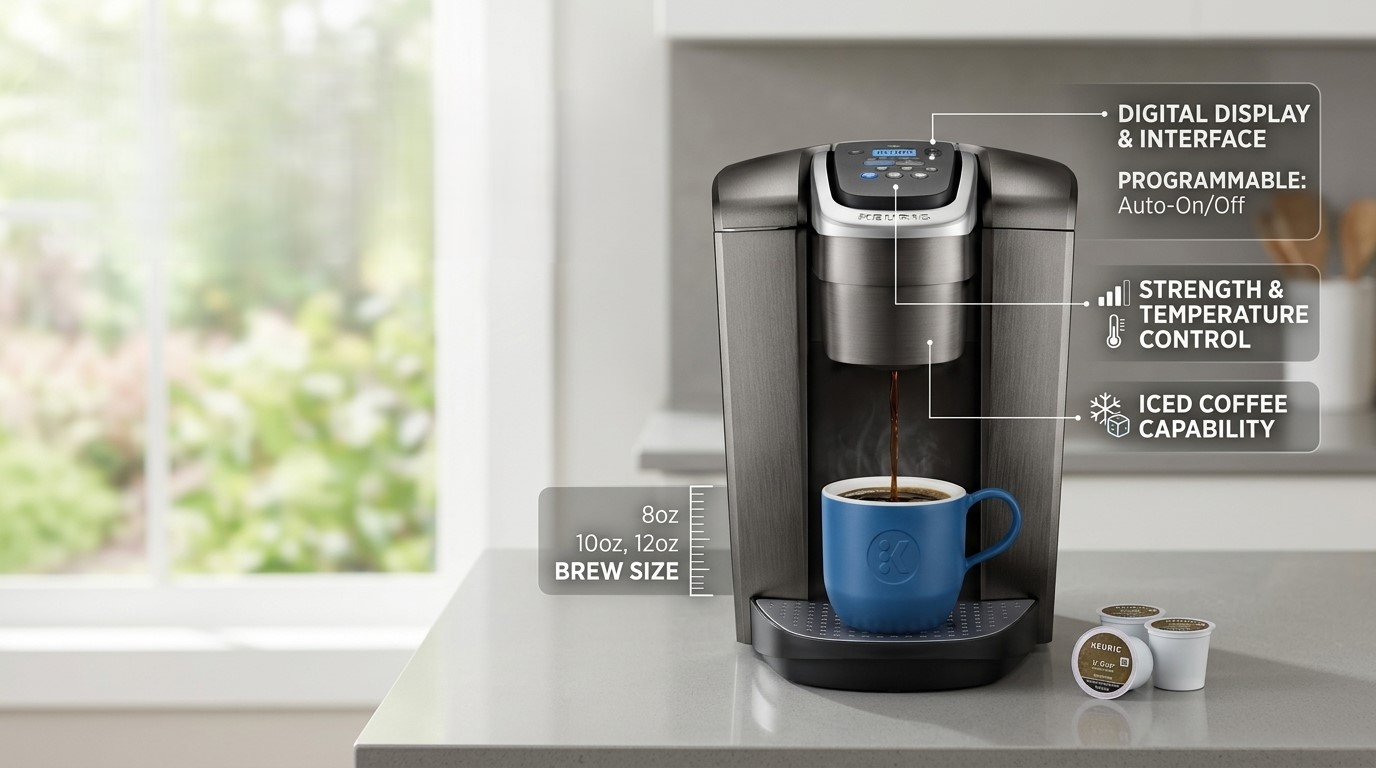
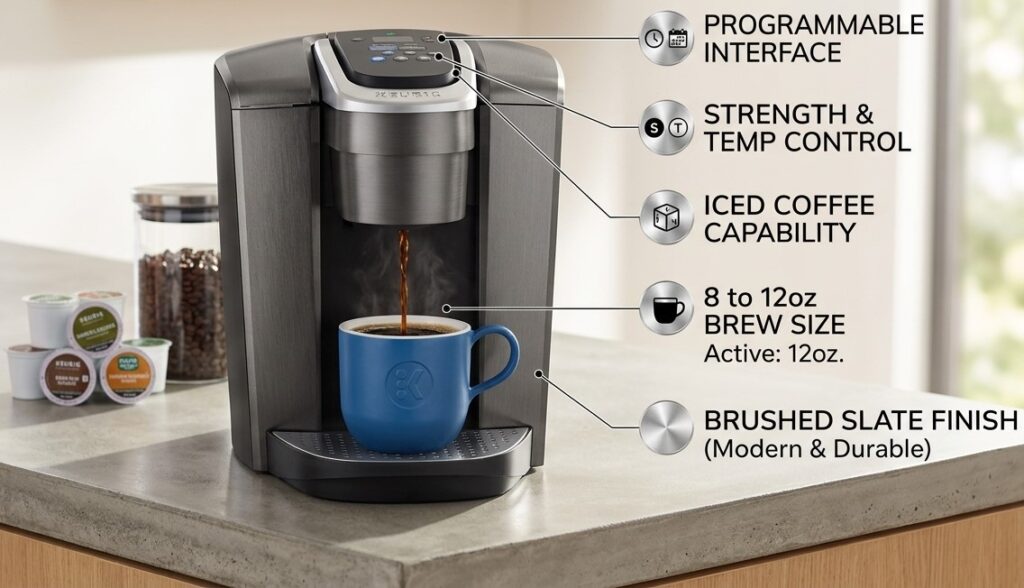
The Keurig K-Elite Single Serve K-Cup Pod Coffee Maker sits in the single-serve pod category, a segment built around speed, consistency, and minimal cleanup. It’s positioned as a step above Keurig’s entry-level models, adding features like adjustable brew strength, temperature control, and an iced coffee setting to the brand’s familiar pod-based brewing system. The Brushed Slate finish gives it a more polished look than the plastic-forward machines many people associate with early Keurig models, which matters if your coffee maker lives in plain view on the counter rather than tucked in a cabinet.
This article walks through what the K-Elite actually does, how people tend to use machines like it, who it may or may not suit, and the practical trade-offs worth thinking about before it earns a spot on your counter. None of this is meant to tell you it’s the right or wrong choice — that depends on your habits — but it should give you a clearer picture than a spec sheet alone.
Key Features
Five Brew Sizes for Different Cups and Mugs
The K-Elite offers five brew size options — 4, 6, 8, 10, and 12 ounces — selected with a single button press. This range covers everything from a small espresso-style cup of hot cocoa to a full travel mug of coffee, which is one of the more practical advantages of single-serve brewing over a fixed-size drip pot. Instead of brewing a full carafe and letting the extra sit on a warming plate, each cup is made to order.
Strong Brew Setting
For people who find standard K-Cup coffee a bit thin, the Strong Brew button adjusts the brewing process to extract more flavor from the same pod. It doesn’t change the pod itself, but it does alter brew time and water flow to produce a bolder-tasting cup. This is a feature worth understanding correctly: it intensifies flavor extraction rather than increasing caffeine content, since both are tied to the pod’s contents rather than the brewing settings.
Adjustable Temperature Control
Water temperature affects flavor extraction more than most people realize — too hot and coffee can taste bitter or scorched, too cool and it can taste flat or underdeveloped. The K-Elite includes a temperature control setting, letting the brewing temperature be adjusted within the machine’s programmable range. This is particularly relevant for tea drinkers, since different teas are traditionally brewed at different temperatures, and for anyone who has a strong preference about how hot their coffee is when it hits the cup.
Iced Coffee Capability
Rather than brewing hot coffee and waiting for it to cool, the Iced setting brews a small amount of concentrated hot coffee designed to be poured directly over a cup of ice. The concentration is adjusted so the finished drink isn’t watered down once the ice melts into it. This is a genuinely different approach from simply pouring a hot brew over ice, which tends to dilute flavor quickly.
Large 75-Ounce Water Reservoir
The removable reservoir holds up to 75 ounces of water, enough for roughly eight cups before a refill is needed, depending on brew size selected. For households with more than one coffee drinker, or for anyone who doesn’t want to refill a small tank every single morning, this is one of the more meaningful quality-of-life features on the machine.
Programmable Auto On and Auto Off
The K-Elite can be programmed to turn on automatically at a set time, so it’s ready to brew as soon as you’re in the kitchen rather than waiting for it to heat up. An auto-off function also powers the machine down after a period of inactivity, which is a small but useful safety and energy-saving detail for anyone prone to leaving appliances running.
High Altitude Setting
Water boils at a lower temperature at higher elevations, which can affect how extraction happens during brewing. The K-Elite includes a high-altitude setting intended to adjust for this, which is a detail that matters more than people expect if you live above roughly 5,000 feet.
Brewer Maintenance Reminder
Mineral buildup from tap water is a normal part of owning any water-heating appliance, and over time it can affect both taste and machine performance. The K-Elite includes a built-in reminder that alerts you when it’s likely time to descale, taking some of the guesswork out of maintenance scheduling.
Quiet Brew Technology
Compared to some earlier single-serve machines, the K-Elite is built with noise reduction in mind, which matters more than it sounds like it would in households where someone is trying to make coffee without waking everyone else up.
Removable Drip Tray
The drip tray lifts out to accommodate taller travel mugs — reportedly up to around 7.2 inches — and also catches spills or accidental brews, making cleanup considerably simpler than wiping down a counter.
How It Can Be Used
A machine like the K-Elite tends to get used in a few fairly predictable ways, and understanding those patterns can help you decide if it matches your routine.
Everyday hot coffee. The most obvious use case is straightforward: insert a K-Cup pod, choose a brew size, and have a finished cup in well under a minute. For people who don’t want to measure grounds, deal with a filter, or wait for a full pot to brew, this is the core appeal of pod-based brewing.
Brewing with your own ground coffee. The machine is also compatible with the Universal My K-Cup Reusable Coffee Filter, sold separately, which allows brewing from bagged or bulk ground coffee instead of individual pods. This is worth knowing about upfront, since it opens the door to using specialty or bulk-bought coffee without being limited to pre-packaged pods.
Tea, hot cocoa, and other hot beverages. Because the machine is really a small, precise hot-water brewing system, it isn’t limited to coffee. Tea pods, hot cocoa pods, and even apple cider mixes work the same way, and the temperature control feature is especially relevant here since tea generally calls for lower brewing temperatures than coffee.
Hot water on demand. Selecting a brew size without inserting a pod produces plain hot water, which is convenient for instant oatmeal, instant soup, or simply making a cup of hot water for someone who doesn’t want caffeine.
Iced coffee without the extra steps. Instead of brewing coffee, refrigerating it, and pouring it over ice later, the Iced setting produces a ready-to-drink iced coffee in one pass. This tends to appeal to people who want cold coffee in warmer months but don’t want to deal with cold brew steeping times or extra equipment.
Programmed morning brewing. Setting the auto-on feature the night before means the machine can be warmed up and ready before you’ve even walked into the kitchen, which is a small convenience that adds up over a lot of mornings.
Who It May Be Suitable For
No single coffee maker fits every household, so it’s worth thinking through who tends to get the most out of a machine built this way.
People who value speed and consistency over ritual. If your ideal morning involves coffee ready in under a minute with minimal cleanup, a pod-based system like this tends to fit well. It removes variables like grind size, water-to-coffee ratio, and brew timing, which is either a benefit or a downside depending on how much you enjoy the process of brewing itself.
Households where different people want different things. Because brew size, strength, and temperature are all adjustable per cup, a single-serve machine like the K-Elite can accommodate a household where one person wants a small strong coffee, another wants a large mild one, and someone else wants tea — all without brewing multiple pots.
People who drink coffee at irregular times. Unlike a drip machine that brews a full pot at once, a single-serve system brews on demand. This suits people who have coffee spread throughout the day rather than all at once, since there’s no need to reheat old coffee or waste an unfinished pot.
Iced coffee drinkers. For anyone who regularly wants iced coffee, especially outside of cold-brew season, the dedicated iced setting removes a few extra steps compared to other brewing methods.
Tea drinkers who share a kitchen with coffee drinkers. The temperature control and hot-water-only option make this a reasonably versatile machine for mixed households, rather than one built purely around coffee.
On the other hand, people who prioritize brewing very large batches at once, who prefer the ritual and control of manual brewing methods, or who are trying to minimize single-use packaging may find other categories of coffee maker line up better with their priorities — more on that in the comparison section below.
Important Things to Consider
A balanced look at any appliance should include the trade-offs, not just the highlights.
Ongoing pod cost. Single-serve pod machines generally cost more per cup over time than brewing with bulk ground coffee in a drip machine, simply because of how the pods are packaged and priced. The reusable My K-Cup filter helps offset this if you’re willing to use your own grounds regularly, but it is sold separately and isn’t included by default.
Packaging and environmental considerations. K-Cup pods are individually packaged, and while some pod lines are recyclable depending on your local recycling program, this is a legitimate consideration for anyone trying to reduce single-use waste. It’s worth checking pod packaging and your municipality’s recycling guidelines if this matters to you.
Counter space. With a 75-ounce reservoir and a brushed metal finish, the K-Elite isn’t a minimalist compact machine — it takes up a reasonable footprint on a countertop. It’s worth measuring available space before assuming it will fit comfortably, especially in smaller kitchens.
Descaling maintenance. Like any machine that heats water repeatedly, mineral buildup happens over time, particularly with hard tap water. The built-in reminder helps, but descaling still requires a bit of routine maintenance using a descaling solution or a vinegar-and-water mix, along with a few minutes of your time every couple of months depending on water hardness and usage.
Not a full espresso substitute. While the Strong Brew setting increases extraction intensity, this is not the same brewing method or pressure system used in true espresso machines. Anyone specifically looking for espresso-style shots, crema, or milk-frothing capability will want a different category of machine entirely, which the K-Elite isn’t designed to replace.
Pod compatibility. The machine is designed around the K-Cup pod format, which is widely available across a large number of coffee, tea, and cocoa brands. That said, it’s still worth confirming pod compatibility if you have a specific brand or roast in mind, since not every specialty coffee brand packages products in this format.
Comparing General Coffee Maker Categories
It can help to step back and look at how single-serve pod machines compare to other broad categories of coffee makers, without focusing on any one specific competing product.
Single-serve pod machines (the category the K-Elite belongs to) prioritize speed, consistency, and low cleanup. Brewing is largely automated, portion sizes are fixed but selectable, and there’s very little room for user error. The trade-off is a generally higher cost per cup and less control over brewing variables like grind size or extraction time.
Traditional drip coffee makers brew a full pot using ground coffee and a paper or reusable filter. These tend to be more economical per cup, especially for larger households, and produce a full pot in one brewing cycle rather than one cup at a time. The trade-off is less flexibility for mixed preferences within a household and the possibility of coffee sitting on a warming plate and losing freshness if not consumed promptly.
Espresso machines, whether manual, semi-automatic, or fully automatic, are built around pressure-based extraction and are the category best suited to espresso-based drinks, milk frothing, and café-style beverages. They typically require more hands-on skill, more cleaning, and a higher upfront investment, but offer the most control over the final result for people who want it.
Manual brewing methods like pour-over, French press, or Moka pots sit at the other end of the spectrum from single-serve pod machines. They require more time and technique but offer the most direct control over strength, extraction, and flavor, appealing to people who enjoy the process as much as the result.
None of these categories is inherently better than another — they’re built around different priorities, and the right one depends on how much you value speed versus control, and cost versus convenience.
Frequently Asked Questions
Does the Keurig K-Elite only work with official Keurig-branded K-Cup pods? No. The machine is built around the widely used K-Cup pod format, which is produced by a large number of coffee, tea, and beverage brands, not just Keurig itself. It’s still worth checking individual product packaging to confirm compatibility if you’re buying from a smaller or specialty brand.
Can it brew coffee without using pods at all? Yes, with the Universal My K-Cup Reusable Coffee Filter, which is sold separately. This filter allows the machine to brew using loose ground coffee instead of a pre-packaged pod, which can be a more economical option for regular use.
How does the iced coffee setting differ from just brewing coffee and adding ice? The Iced setting brews a smaller volume of more concentrated hot coffee specifically designed to be poured over a cup filled with ice. Because the coffee is more concentrated going in, the finished drink is less likely to taste watered down once the ice begins to melt, compared to pouring a standard hot brew directly over ice.
What’s the difference between the Strong Brew setting and the temperature control setting? Strong Brew adjusts brewing parameters to extract more flavor from the same pod, resulting in a bolder-tasting cup. Temperature control adjusts how hot the water is during brewing, which affects extraction and taste in a different way. They can generally be used together or independently, depending on preference.
How often does the water reservoir need to be refilled? The 75-ounce reservoir holds enough water for roughly eight cups, though the exact number depends on which brew sizes are selected. Households with heavier daily coffee use may still want to refill it once a day, while lighter users may go longer between refills.
Does the machine require regular maintenance? Yes, as with any appliance that heats water repeatedly, periodic descaling is recommended to prevent mineral buildup from affecting taste and performance. The machine includes a built-in reminder to help track when descaling is likely due, though actual frequency depends on local water hardness and how often the machine is used.
Can brewing be scheduled in advance? Yes. The programmable auto-on feature allows the machine to be set to turn on automatically at a chosen time, so it’s warmed up and ready without needing to be started manually each morning. An auto-off feature is also available to power the machine down after a period of inactivity.
What colors or finishes is it available in? The K-Elite is offered in a few different brushed metal finishes, including Brushed Slate, along with other color options depending on availability. The finish is a cosmetic choice and doesn’t affect the machine’s functionality.
Conclusion
The Keurig K-Elite is built around a fairly clear premise: make single-serve brewing faster and more customizable without turning it into a complicated process. The combination of adjustable brew size, strength, and temperature, along with the dedicated iced coffee setting and a reservoir large enough to avoid constant refilling, covers a wide range of everyday hot and cold beverage needs. It isn’t designed to replace an espresso machine or compete with the per-cup economics of a large drip pot, but for households that value convenience, consistency, and flexibility across different drinkers and drink types, it fills a fairly specific and well-defined role.
Like any appliance, whether it’s the right fit comes down to your own habits — how much coffee you drink, how many people you’re brewing for, and how much you value speed versus control. Hopefully this overview gives you a clearer sense of where it fits before making that call.