Introduction
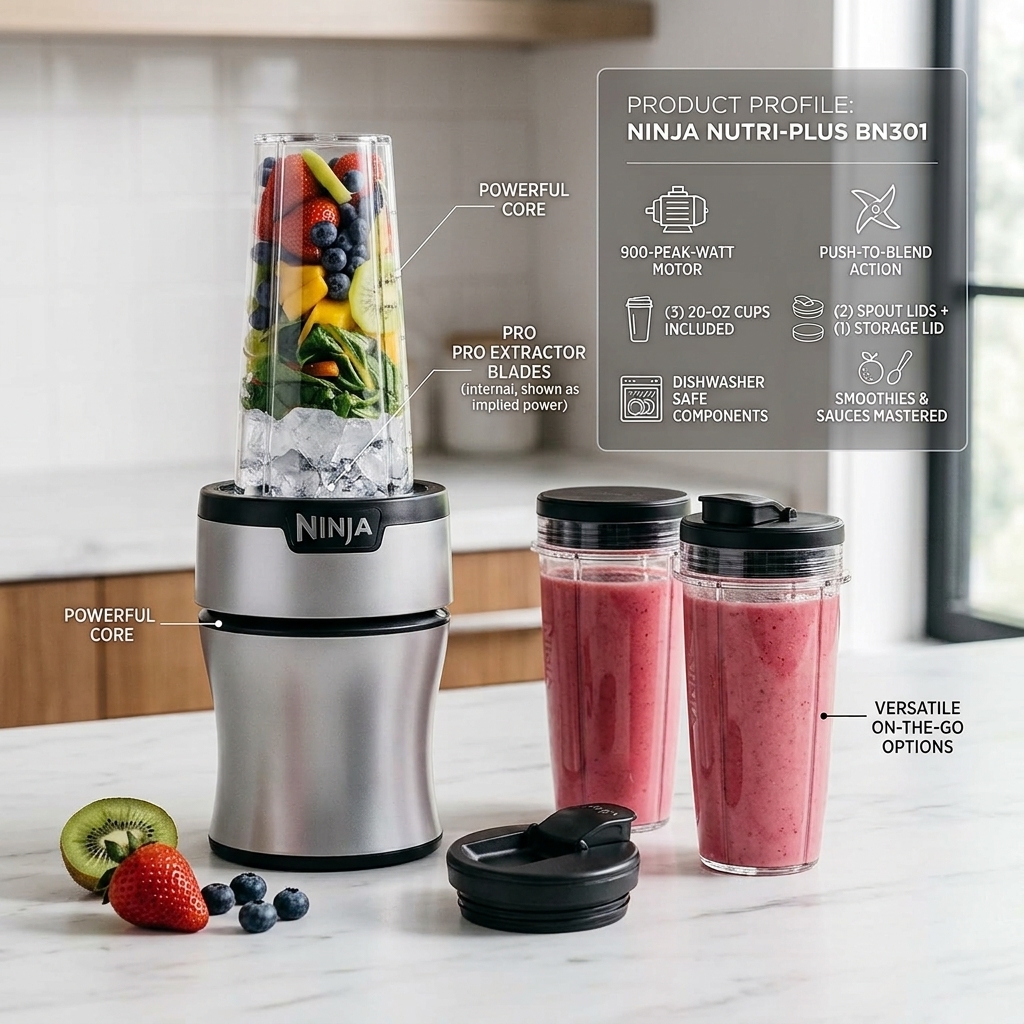
Personal blenders have become a fixture in modern kitchens, largely because they solve a very specific problem: most people don’t need a giant pitcher blender for a single smoothie or protein shake. They need something compact, fast to clean, and easy to grab on a busy morning. The Ninja Nutri-Plus Personal Blender, model BN301, is one of the options built around that idea. It pairs a 900-peak-watt motor with a push-to-blend mechanism, three 20-ounce cups, two spout lids, and a storage lid, all wrapped in a silver finish that fits reasonably well on most counters.
This article walks through what this blender actually offers, how it might fit into different routines, what to think about before adding it to a kitchen, and how it generally compares to other blending options on the market. The goal here isn’t to declare it the “best” anything — it’s to give you enough grounded, practical information to decide whether it lines up with what you’re actually looking for.
It’s worth noting upfront that this piece is written from a research and product-information standpoint, not from hands-on testing. Everything described reflects the manufacturer’s stated specifications and commonly understood use cases for this style of appliance, along with general context about how personal blenders function.
Key Features
900-Peak-Watt Push-to-Blend Motor
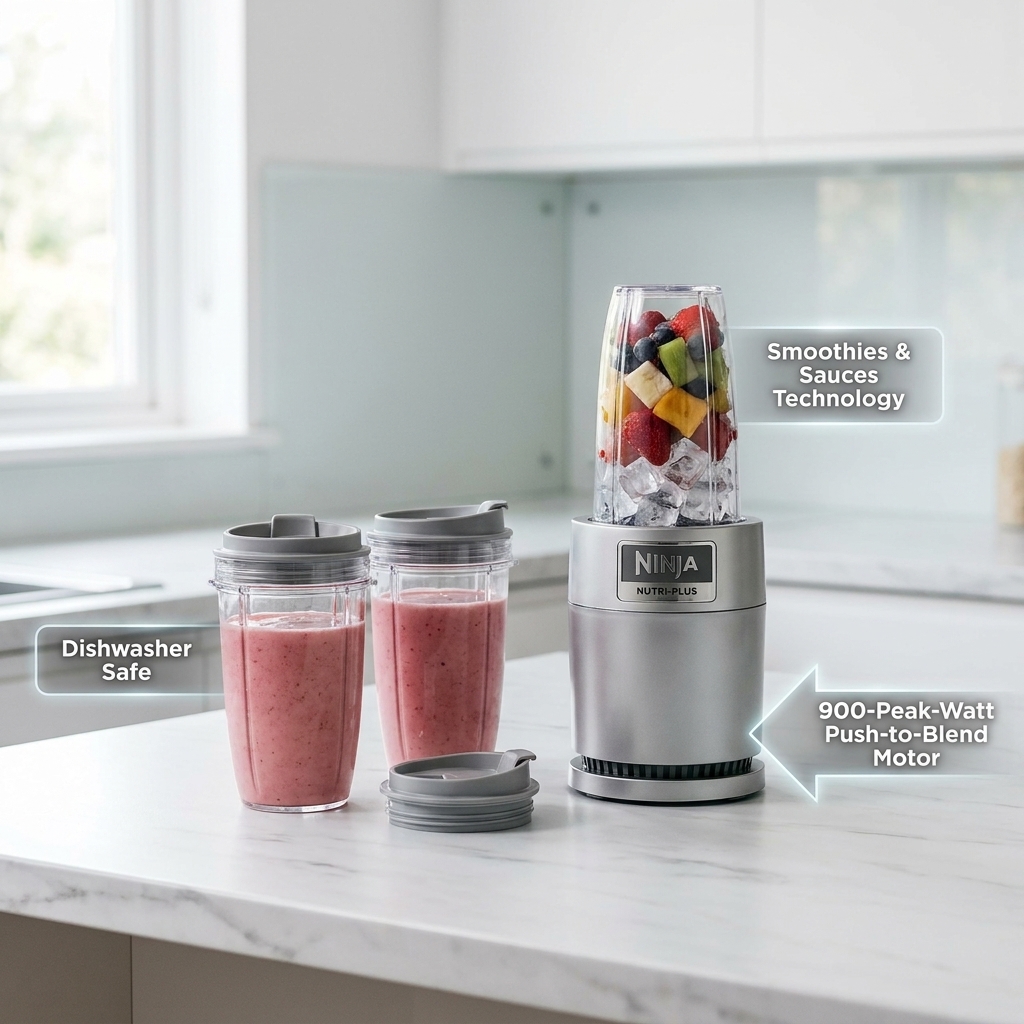
At the core of the BN301 is a 900-peak-watt motor, which is a fairly common power range for personal-sized blending systems. The “push-to-blend” design means there’s no separate power button or dial to manage — you assemble the cup with the blade attachment, invert it onto the base, and press down to activate blending. Releasing the pressure stops the motor. This kind of interface is meant to simplify operation, particularly for people who want a quick, no-fuss process rather than navigating multiple speed settings.
Peak wattage numbers are typically the maximum output the motor can reach for short bursts, rather than a sustained wattage figure, so it’s helpful to think of 900PW as an indicator of blending capability rather than a number to compare directly against continuous-wattage motors in larger appliances.
Three 20-Ounce Cups
The set includes three cups, each with a 20-ounce capacity. Having multiple cups is arguably one of the more practical aspects of this bundle, since it allows for back-to-back blending — one person’s smoothie, another’s shake, or a sauce prepped for later — without needing to wash a cup between uses. Twenty ounces is a reasonably generous single-serving size, generally enough for a substantial smoothie or shake without being so large that it strains a smaller motor.
Two Spout Lids and a Storage Lid
Beyond the blending cups themselves, the set comes with two spout lids designed for drinking directly from the cup, and a separate storage lid intended for sealing a cup for the refrigerator or for transport. This distinction matters more than it might initially seem: a spout lid is built for controlled sipping, while a storage lid is built to keep contents fresh and spill-free when the cup isn’t actively being used as a drinking vessel. Having both types included means the same cup can transition from blending, to on-the-go drinking, to short-term storage without needing extra containers.
Dishwasher-Safe Components
The cups, lids, and blade assembly are described as dishwasher safe, which is a meaningful convenience feature for a blender used daily. Personal blenders tend to accumulate residue quickly, especially when used for thicker recipes like nut butters or frozen fruit blends, so being able to load parts into a dishwasher rather than hand-washing blades and lids each time can save a noticeable amount of daily effort.
Compact, Single-Serve Format
Unlike full-size countertop blenders with a fixed pitcher, this system is built around interchangeable cups that double as the blending vessel and the drinking container. This single-serve format tends to appeal to people who don’t want to deal with transferring blended contents from a pitcher into a separate cup, and who don’t necessarily need to blend large batches at once.
How It Can Be Used
A personal blender like this one is generally suited to a range of everyday food and drink preparation tasks, particularly ones involving smaller portions. Some common use cases include:
Smoothies and shakes. This is the most obvious and frequent use for a personal blender. Combining fruit, liquid, and optional add-ins like protein powder, oats, or leafy greens is a task well-suited to a 900-peak-watt motor and a 20-ounce cup.
Protein and meal-replacement drinks. For people who prepare protein shakes as part of a fitness routine, the ability to blend, seal with a spout lid, and take the cup along can streamline a morning or post-workout routine.
Basic sauces and dressings. Smaller-batch sauces, vinaigrettes, and dips can often be prepared in a personal blender, particularly when the ingredients don’t require prolonged processing. This tends to work well for single-meal portions rather than large batches meant for multiple days.
Frozen fruit and semi-frozen blends. Many personal blenders, including this style, are marketed as capable of handling frozen fruit in moderate amounts, which is useful for smoothies with a thicker, colder consistency. That said, large quantities of ice or very hard frozen ingredients can be more demanding on a smaller motor, which is worth keeping in mind (more on this in the “Important Things to Consider” section).
Single-serving soups or purees. Some users repurpose personal blenders for small portions of blended soup or pureed vegetables, especially when cooking for one or two people.
Batter and pancake mixes. Lighter batters — think basic pancake or waffle mixes — can sometimes be prepared in a personal blender cup, which also doubles as a pouring vessel thanks to the spout lid.
On-the-go nutrition. Because the cups double as drinking containers, this format lends itself to preparing a shake or smoothie at home and taking it directly to work, the gym, or during a commute, without dirtying an additional cup.
It’s worth mentioning that personal blenders are generally not designed for tasks that require a large-capacity pitcher, such as blending big batches of soup for a family, making large quantities of frozen cocktails, or kneading dough. For those tasks, a full-size countertop blender or a stand mixer is typically a better fit.
Who It May Be Suitable For
Given its format and feature set, this type of personal blender tends to appeal to a fairly specific set of situations and users:
People living alone or in small households. Since the cups are sized for single servings, this format avoids the common issue of a large pitcher blender producing more than one person can reasonably use in a day.
Students and people in small living spaces. Compact appliances that don’t require much counter or storage space are often appealing in dorms, studio apartments, or shared kitchens where space is limited.
People with active or fitness-focused routines. The combination of a fast blending cycle, spout lids for drinking, and manageable cleanup can suit people who prepare shakes or smoothies regularly as part of a workout or nutrition routine.
Those who prioritize quick cleanup. Because the parts are dishwasher safe and the format avoids a bulky pitcher, this can appeal to people who want to minimize the time spent on post-blending cleanup.
People new to blending or looking for a lower-commitment option. Compared to larger, multi-function blending systems, a personal blender is often a simpler entry point, both in terms of learning the controls and in terms of the physical footprint it occupies in a kitchen.
On the other hand, this format may be less suitable for people who regularly cook for larger households, who want a single appliance that can also crush large amounts of ice for entertaining, or who are looking for extensive speed and texture control through multiple settings, since the push-to-blend design offers a simpler, less granular operation compared to multi-speed countertop models.
Important Things to Consider
No appliance is a perfect fit for every kitchen or every use case, so it’s worth thinking through a few practical points before deciding whether this blender aligns with your needs.
Motor Power and Ingredient Limitations
A 900-peak-watt motor is capable for a personal blender, but it’s still a smaller motor compared to many full-size countertop blenders, which can range well beyond 1000 watts of continuous power. This generally means the BN301 is better suited to softer ingredients, moderate amounts of ice or frozen fruit, and liquids, rather than very hard ingredients or large volumes of ice meant for crushed-ice drinks. Overloading a smaller motor with dense or very hard ingredients can also affect performance over time, so it helps to follow recommended fill lines and ingredient guidance from the manufacturer.
Cup Capacity and Batch Size
The 20-ounce cup size is well suited for individual servings but isn’t intended for larger batch preparation. If you regularly need to prepare drinks or sauces for more than one or two people at a time, you may find yourself running multiple blending cycles, which can offset some of the convenience this format is designed to offer.
Noise Level
Like most compact blenders with a high-speed motor, this model is likely to produce a notable amount of noise during operation, which is common across this category of appliance. If you’re blending early in the morning in a shared living space, this is a practical factor to keep in mind.
Blade Handling and Safety
The blade assembly, while convenient for direct blending and drinking, does require careful handling during cleaning, especially if hand-washing rather than using a dishwasher. As with any blender, care should be taken when removing or attaching the blade unit to avoid injury.
Long-Term Durability Considerations
As with most small kitchen appliances in this price and power category, the components — particularly seals, gaskets, and blade assemblies — are subject to wear over time, especially with frequent use involving fibrous or fibrous-adjacent ingredients like leafy greens or fibrous fruit skins. Reviewing the manufacturer’s warranty details and care instructions can help set realistic expectations for longevity.
Storage and Counter Space
While the base unit itself is compact, owning three cups plus multiple lids does mean a bit more storage planning than a single-pitcher blender might require. It’s worth considering cabinet or counter space for the full set, not just the motor base.
Comparing General Categories of Blenders
To put this type of appliance in context, it can help to compare personal blenders as a category to a couple of other common blending options, without focusing on any specific competing brand or model.
Personal Blenders vs. Full-Size Countertop Blenders
Full-size countertop blenders typically offer a larger pitcher — often 40 to 70 ounces or more — along with multiple speed settings, pulse functions, and sometimes preset programs for specific tasks like soups or frozen drinks. They tend to have more powerful, continuous-duty motors capable of handling tougher ingredients and larger batches. The tradeoff is usually a larger countertop footprint, more components to clean, and a higher likelihood of needing to transfer blended contents into a separate cup for drinking.
Personal blenders, by contrast, prioritize convenience and portion control. The blend-and-drink format reduces extra dishes, and the smaller footprint suits kitchens where space or storage is limited. What they generally give up in exchange is raw power, batch size, and the variety of speed or texture controls found on larger machines.
Personal Blenders vs. Immersion (Stick) Blenders
Immersion blenders are handheld devices used directly in a pot, bowl, or container, rather than a fixed cup or pitcher. They tend to excel at tasks like blending soups directly in the cooking pot or making small batches of sauces and purees without transferring ingredients to a separate container. However, they’re generally not designed for tasks like making a smoothie with ice, since they lack the sealed blending chamber and motor strength of a cup-based system.
Personal blenders like the BN301 are better suited to tasks requiring a sealed container — smoothies, shakes, and dressings — while immersion blenders are often more convenient for in-pot food preparation. Many kitchens end up using both, depending on the task at hand, rather than treating one as a replacement for the other.
Personal Blenders vs. Multi-Function Blending Systems
Some blending systems on the market combine a personal blender’s cup format with a larger pitcher attachment, food processor bowl, or additional accessories, aiming to offer more versatility from a single base unit. These systems can be appealing for households that want more functionality without buying multiple appliances, though they often come with more components to store, assemble, and clean. A single-format personal blender, like the BN301, tends to trade that added versatility for simplicity — fewer parts, a more straightforward routine, and a narrower but more focused set of tasks it’s built to handle well.
Frequently Asked Questions
Is this blender powerful enough to crush ice? Personal blenders in the 900-peak-watt range can generally handle moderate amounts of ice, particularly when combined with liquid, but they’re typically not designed for large batches of crushed ice on their own. Following the manufacturer’s guidance on ice quantity and liquid ratios tends to produce better and more consistent results.
Can I make hot liquids in this blender? Most personal blenders, including cup-based systems like this one, are not designed for hot liquids due to pressure buildup risks in a sealed cup. It’s generally recommended to let hot ingredients cool to a safe temperature before blending, and to check the specific manufacturer guidance included with the product.
How do the spout lids differ from the storage lid? Spout lids are designed with an opening that allows for direct drinking from the cup, making them suited for smoothies or shakes consumed shortly after blending. The storage lid, on the other hand, is a solid, sealed lid intended for refrigerating or transporting contents without drinking directly from the cup.
Is it necessary to hand-wash the blade assembly? While the components are described as dishwasher safe, some users prefer to hand-wash blade assemblies to help preserve sharpness and reduce wear over time. Either approach is generally acceptable, though dishwasher use offers more convenience for everyday cleanup.
Can this blender handle nut butters or thick pastes? Personal blenders can sometimes manage small batches of nut butter or thick pastes, though this tends to place more strain on a smaller motor compared to smoothies or thinner blends. If nut butter preparation is a frequent goal, it may be worth checking specific manufacturer guidance, since prolonged use with very thick mixtures can affect motor longevity.
How many people is the 20-ounce cup size meant to serve? Twenty ounces is generally considered a single-serving size for a smoothie or shake, particularly for adults. It may be slightly generous for smaller portions or slightly limiting for those who prefer very large drinks, but it aligns with common personal blender cup sizing.
Does the push-to-blend design offer variable speed control? The push-to-blend mechanism is generally a simplified, single-action design rather than a multi-speed system. Blending intensity is typically controlled by how long the cup is pressed onto the base, rather than through separate speed settings, which differs from many full-size blenders that offer multiple speed dials or pulse functions.
What’s the best way to clean the cups between different recipes? Rinsing cups shortly after use, before residue has a chance to dry, tends to make cleanup easier, whether washing by hand or using a dishwasher. For particularly thick blends like nut butter, a quick pre-rinse before dishwasher loading can help avoid residue buildup on other dishes.
Conclusion
The Ninja Nutri-Plus Personal Blender (BN301) represents a fairly typical, well-rounded example of the personal blender category: a 900-peak-watt motor, a push-to-blend operation style, three 20-ounce cups, a pair of spout lids, a storage lid, and dishwasher-safe parts. It’s built around convenience, portion control, and simplified operation rather than raw power or large-batch versatility, which makes it a reasonable fit for individuals, small households, students, or anyone whose blending needs center around smoothies, shakes, and smaller-scale food prep.
As with any kitchen appliance, the right choice ultimately depends on how you plan to use it — the size of the batches you typically make, how much counter and storage space you have, and whether you need the broader capability of a full-size blender or the focused simplicity of a personal one. Weighing those factors against what this model offers can help clarify whether it lines up with your kitchen habits.